
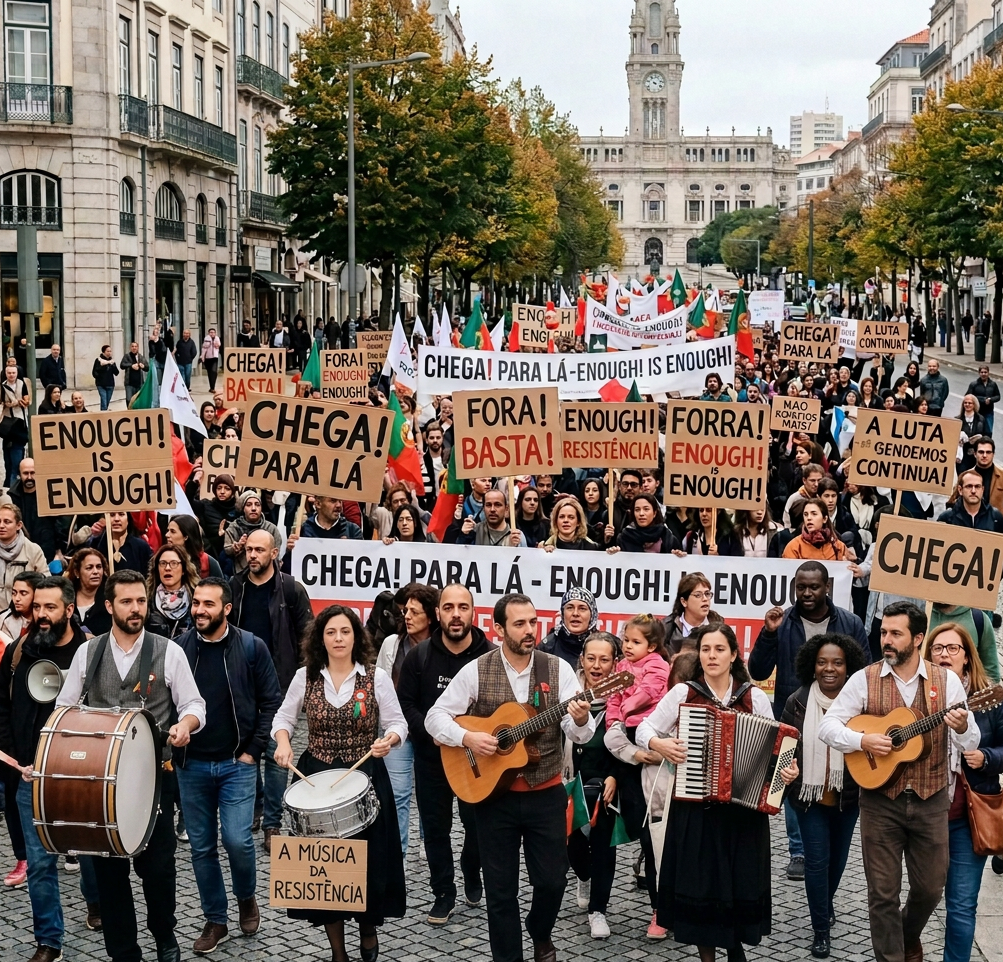
Fact:
1. In Vila Nova de Gaia, near Porto, ten men followed a Brazilian couple and physically attacked them for being gay and black. They went to the hospital, and the police station. They have now decided to leave Portugal because “there are more and more aggressions on Brazilians.”
2. A Brazilian female journalist was doing her post-grad at the University of Minho, in the distant north of Portugal. She had a disagreement with a male colleague about the timing of the group work. He punched her face, she fell to the ground, then he kicked her several times. During the attack, he asked her what she was doing in his country, told her to return to where she came from, and that the only way she was paying for the Portuguese tuition was by being a whore.
3. A 56-year-old Portuguese man placed an online video saying he’d pay €500 per Brazilian head that was brought to him. The police arrested the guy, and now he’s free awaiting judgement. He lost his job at a bakery, whose owner put out a statement that they did not discriminate against anything.
4. A Portuguese man announced in several online platforms that he would gift a central Lisbon apartment to whoever slaughtered and exterminated all Brazilians. He did not specify if the Brazilians to be exterminated were living in Portugal, Brazil or both. He also offered €100,000 to whoever killed the Brazilian journalist Stefani Costa. The man has been charged on several counts. We await the results of the verdict.
5. A Brazilian female taxi driver in Aveiro was beaten up by two male “colleagues” who called her a demon, a favela whore, and told her to go back to where she came from. She started making a video of the fracas. The verbal attack changed to physical. One of the men jumped into the car through an open window, tried to steal her phone, and beat up her face in the process. She went to the police. She’s afraid it will all come down to an episode of road rage, while she insists it was a hate crime: xenophobic and misogynistic. Her pro bono lawyer is not going to let it go.
6. Two Brazilian artists had started their street performance titled “Letters to Nobody” in Porto. The performance required members of the audience to write a line, which would then be interpreted by the actors. But the aggression started with the first person interviewed, and more people joined in. Both actors were thrown to the ground, punched and kicked. The police arrived, the actors went to hospital, and a lawyer accompanied them to the police station to file their complaints.
7. In Cinfães, in northern Portugal, a Brazilian, black nine-year- old went to the toilet at school, and was followed by other students who ganged up on him and closed the toilet door on his fingers. When his mother arrived at school to take her son to hospital, she was told he had hurt himself playing with other kids. She was given a box with two parts of her son’s fingers. Doctors tried to reattach the fingers but failed. We don’t know what happened to the perpetrators: it appears the case is “under investigation.”
8. Kadu was a 21-year-old Brazilian black restaurant worker. Two women were being harassed in the restaurant by a group of men, so Kadu asked them to stop. This happened three times. The women left, but the men waited outside until Kadu finished his shift. When he left, they stabbed him several times. He was taken to hospital but did not survive. One of the perpetrators was caught by the police, and now nobody knows where he is. The National Assembly offered a Note of Condolences for Kadu’s death.
There are times when I say, “Enough!” and then I catch myself: the Portuguese extreme-right political party “Chega!” translates as Enough! Frankly, I’ve had Enough! of Enough!.
The political plurality in Portugal results from the end of Salazar’s dictatorship in 1974. Portuguese people, and EU nationals, can choose their candidates from 23 political parties. With all that choice, representatives of only 10 parties have been elected to parliament.
We had presidential and parliamentary elections last year and this. I voted in both. Victory in parliament belonged to the Social-Democratic Party with 52% of representatives, followed by Chega! with 23%. It follows a European trend favouring the extreme right. Chega! has been making inroads in Portugal, with misogynistic (“Women must not work, they must obey the men!”), homophobic (“End same-sex marriage!”), and anti-immigration (“We’re not having immigrants here!”) bias. Chega! candidates favour racist and xenophobic expressions, and when confronted, they retort “I never said that!” During the electoral campaign, Chega! claimed that they were taking over the Algarve, and then the country. They won in one town in the Algarve, which I think is one too many, but they made inroads in several town councils. Being the second most voted party in the country, Chega!’s power and influence increased among citizens who believe they are now empowered to bully and insult and attack immigrants with all their might and total impunity. Unfortunately, children learn this type of behavior from their parents and friends, and it perpetuates a xenophobic pattern of behaviour.
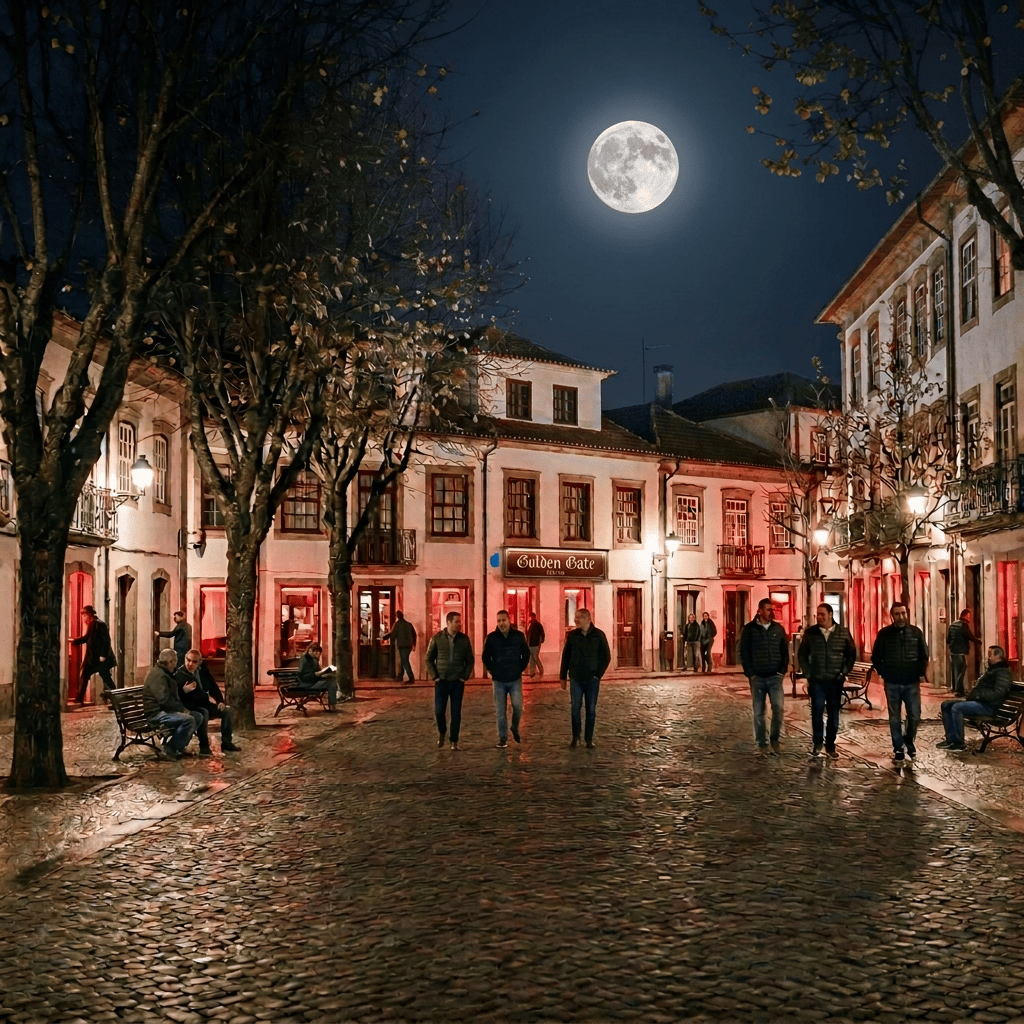
“The Brothel of Europe”
Some twenty-five years ago, when I first visited Portugal, Bragança was in uproar. Bragança, a district and a town in the north of Portugal, was the cradle of the Most Serene House of Bragança, which reigned in Portugal, and many parts of the world, from 1640 until 1910 when they were dethroned by the Republican cause.
The Bragantine uproar was due to the arrival of many Brazilian women who, according to the local womenfolk, took advantage of the local men and their family money. Dutiful wives complained to all who would hear, or not, that that their men suddenly craved the disgusting Brazilian filth on offer at all times of the day and night. Brazilian dirt kept their men out of their warm, clean, respectful, God-fearing and decent, welcoming Portuguese homes. Bragantine husbands had turned into priapic satyrs who thought of nothing else but debauchery of the highest order. Those Brazilian women without morals had transformed the town into a teeming, throbbing, collective brothel, so those whores better bolt back to where they came from.
Maybe it wasn’t all like that. It was worse.
A group of wives complained to the police, to the mayor, but no municipal bureaucrat helped them. No law had been broken by the girls from Brazil. So no fireman put out that fire.
Until the day when the topic became Time magazine’s cover story, “The Brothel of Europe.” Now it was a story impossible to contain within the limits of Bragança. Overnight, pious Bragança wives and scandalous Brazilian women had become an international case. Bragança’s reputation wallowed in a mephitic swamp. What would others think? Politicians, policemen, and a bishop, among others, crawled into the limelight to support those abandoned wives and children, to uphold secular and canonical laws, and to protect the reputation and integrity and unity of all blessed Bragantine families.
The authorities started operation clean-up: some of the Brazilian women were caught by the police because their visas had expired, so either they were deported back to Brazil or found somewhere else to live. Some bars and brothels were closed. But worry not! Their Portuguese and Spanish owners trafficked new women (or the same) into Portugal and opened new “bars” in the surrounding areas of Bragança.
The most serene and respectful women of Bragança have been quiet since then. But I don’t know if their marriages survived the second wave of the girls from Brazil and elsewhere.
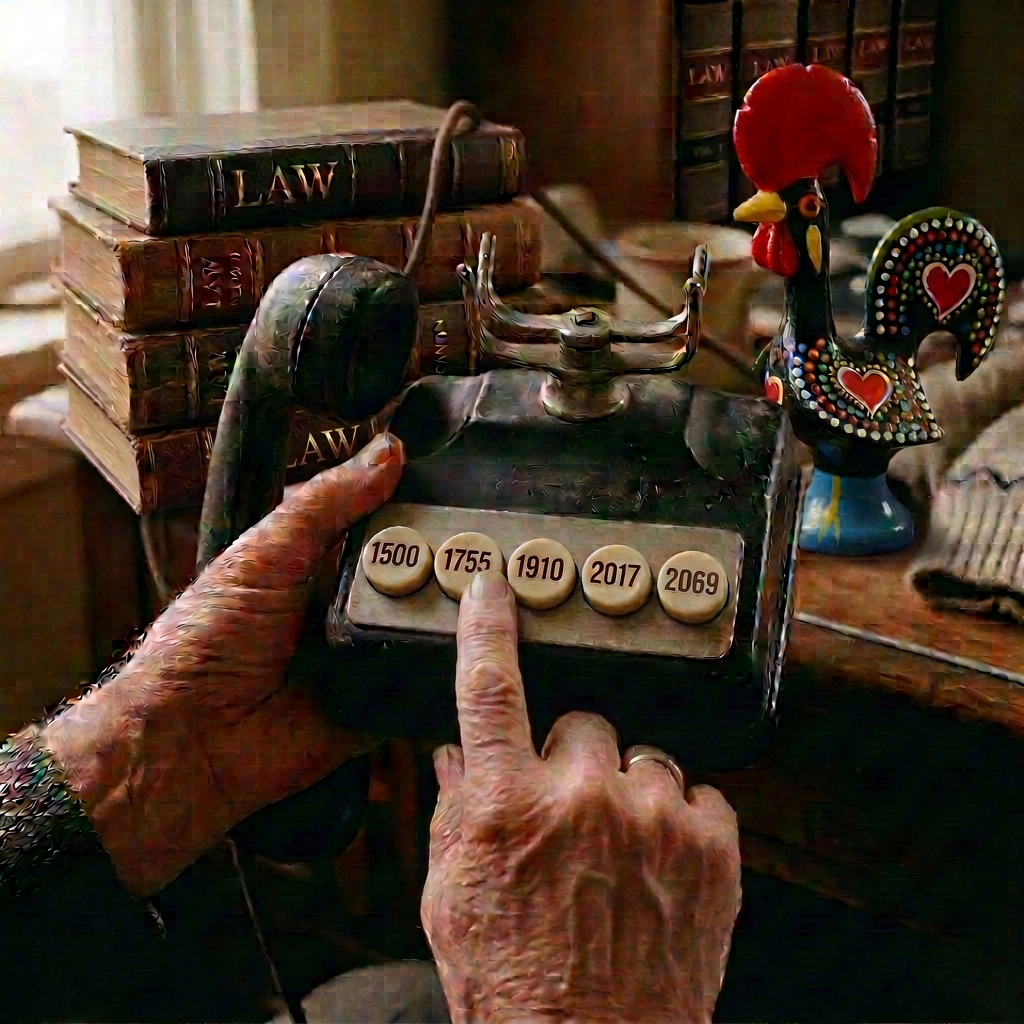
To Exit Colonial Mode, Please Press 2017
As a Brazilian in Portugal, I’ve been asked what right I had to live in Portugal; who had allowed me to live here; since when did the Portuguese people accept pitiful things like me in this country; paying taxes did not give me the right to live here. One professor told me he wasn’t going to accept my papers in Brazilian Portuguese, which, let’s face it, is not much different from the local Portuguese. Someone else, a frustrated, talentless poet, told me that I should return to the defecation-laden overseas insignificance where I came from. Highfalutin indeed. I don’t remember all the insults; neither would I want to. I’m busy pressing buttons.
The original respect I felt for Portugal has been eroded, given way to weariness in the certainty that the abuse happens daily, for if a Brazilian says something, the locals instantly know his or her origin. In my case, and I believe I’m lucky, they start with what they think is praise, “But you’re not black! How come you’re from Brazil? People from Brazil are always black!”
Little do they know that my “whiteness” was inherited from racist and xenophobic politics in Brazil at the end of the 19th and beginning of the 20th centuries. The government then decided that the Brazilian population, consisting of mostly Afro-descendants, needed to be whitened. White blood was superior to all others. The country needed white blood. So, from a Brazil that was independent and had freed its slaves, the world heard, “Come to our land, you white German, French, Spanish, Italian people. Even Portuguese, Japanese and Syrian and Lebanese. We take everybody who is not black.”
Somehow, that’s what Chega! is all about. Proud to be white, as some say in some unsanitary parishes.
Let’s not discount ow-grade xenophobia or racism. It’s like a perennial background thrum, you don’t know where it comes from, but it is there, day in, day out, and when you least expect it stretches its claws to shred you. Can you take precautions against it? Pretend to be deaf or have no heart? I can’t imagine the effect it has on someone pelted with daily insults for being who he or she is. It must be unbearable. My experience is nothing compared to theirs.
A university colleague once jabbed at me, in front of the class, “So how many Brazils fit in Portugal? Two or three?” I stifled a laugh and said, “About 100 Portugals fit in Brazil.” You’d be justified to think that geography is not the strongest point for the Portuguese, but they managed to circumnavigate the globe when most people thought the earth was flat. They made maps that prompted many countries to sail and fight for the great trade routes to the Americas, Africa and Asia. Portugal traded in goods and people, extracted gold, wood, precious stones and spices from its colonies, and became one of the richest and most influential countries in the world.
Back then Portugal had few people they could spare to colonise the world, what with Napoleon and such malfeasance in Europe, Portuguese men of valour were spread thinly from Asia to the Americas. To make governing and controlling easier, Brazil was divided into Capitanias Hereditárias (Hereditary Captaincies), huge chunks of land given to Portuguese noblemen with the objective of extracting more natural resources, defending the crown’s possessions, and whipping natives and slaves into obedience to produce more stuff for use by Portugal. Noblemen were encouraged to have children with the women they owned, black and natives, and the offspring would turn into more slaves to work the land they conquered: pleasure and profit.
Unfortunately, that colonial mentality of the whip and the dick has survived and fermented in the current extreme-right leaning Portugal. While Brazil the colony has grown into a full-fledged country, Brazilian women in Portugal, the majority of whom are Afro-descendants, are still thought of as slave whores who should be subjected to all sorts of misogynistic, racist and xenophobic abuse. When they’re not beaten up first.
Today, Portugal, with its 10.4 million inhabitants, has a per capita GDP of US$ 32,000, is a poor country compared to Sweden with its GDP at US$63,000 , and the United States’ at US$91,000. Brazil’s per capita GDP is US$ 10,700. It’s easy to see where Brazilians will go to work to earn more money, taking into consideration language, weather, and opportunities.
Gigantic Brazil, with its 214 million inhabitants, pays a minimum salary of under €300 a month. It’s no wonder Brazilians decant to Portugal, where the minimum salary is €920. Some Portuguese people believe Brazilians are stealing their jobs, and get angry that qualified professionals, or mostly workers in trade and service, find jobs in the country.
The Portuguese constitution guarantees universal health care and state-subsidised prescribed medication, but the system is now groaning under huge pressure because the money invested in it has not been proportional to population growth. Patients wait for months for a surgery, and more than once I’ve heard rumblings from the Portuguese Association of Pharmacies about the lack of payment for the medications they had sold. Portugal also offers housing for the poorest, and meagre pensions for its nationals. Workers’ rights are assured by law, with holidays of 22 working days per year; childbirth full-pay time off of 120 days for the mother, and 28 days (7 being obligatory) for the father. The national minimum salary is paid 14 times a year, the two extra months as subsidies for holidays and Christmas. This sounds jolly and respectful up to a point, but the Portuguese people don’t want to share their social and economic achievements with immigrants. Portuguese people seem frustrated about having collapsed into such a dilapidated social position.
The colonies have disappeared. Buying a first house has become prohibitive. The national hero is Cristiano Ronaldo, but he is approaching his last football rites and now Portugal will never win the World Cup. But Chega! slithers in with its ultra-right statements to instigate the population against immigrants, especially Brazilians, who they say are the cause of all problems in the country. I do wonder: if all the 575,000 Brazilians left Portugal, what would happen?
Portugal is a member of the Council of Europe, the United Nations, the International Court of Justice, and the International Criminal Court. It has signed and approved 14 international conventions on human rights; women’s rights; economic, social, and cultural rights; children’s rights; elimination of all forms of discrimination; preventing and combating all forms of violence against women; protection of national minorities, and more. It’s a lot of paper and words and signatures and official seals and cocktails for us to find all that prejudice and discrimination ensconced in this country’s contemporary history.
Mind you, only in 2017 did Portugal promulgate a law that “Establishes the legal framework for preventing, prohibiting and combating discrimination on the grounds of racial and ethnic origin, skin colour, nationality, descent and territory of origin.” Folks, 2017! Until then, people could choose to live in Colonial Mode. It looks like many still have not pressed 2017 to exit Colonial Mode.

The Hades Brigade in Action
When we got married in Brasília, British Husband needed some documents from the British Embassy in Brasilia. He was the first British citizen to get hitched in town, and embassy people didn’t know what documents to get, or how. They had to ask the London ether for directions. But first things first: before documents were done, there were bets, left, right and center, at the embassy on how long it would take me to apply for British nationality. Someone lost that bet big time.
I’ve been married to Husband for almost 52 years and during that time I’ve been asked countless times if I had gotten a British passport. A British passport, according to inquisitors proud of their British heritage, would be more valuable than a Brazilian one; I would be more respected in the world. Husband himself never said anything to me – he knows better than that.
But then came the day when I decided that, since I was going to live in Portugal for approximately the rest of my life (I never discount another move), I might as well apply for Portuguese nationality and be done with it. I researched the process and read the deceptively simple forms I had to fill in, not realising what was hidden in their tricky questions. For me, there was nothing easier than gathering a bunch of documents and sending them wrapped with a pink bow to the Lisbon branch of that special department no living person has ever seen, the Hades Brigade.
Things got a tad complicated when I turned the form page and found that the Hades Brigade demanded an attestation of good behaviour from where I had lived before Portugal. I have lived in six countries. As a goodwill measure, the Portuguese officialdom would not require the attestation from Portugal, because they (ominous grin) would do their own inquiries at no extra cost for me. I suppose the price was included in the gold nuggets I’d have to pay for the process to go ahead.
After that show of Portuguese generosity, I looked forward to dealing with the Hades Brigades of five countries for their august attestations: USA, England, Switzerland, Indonesia, and Brazil. I had plenty of time – six months – to get it all. After six months, the documents became invalid for the Portuguese government. I don’t know why.
Each attestation needed to be apostilled, that is, signed by someone ranked above the original signatory, attesting that the attestation had been originally signed by a person qualified to sign said attestation, all according to the Hague Convention on Apostilles which simplifies the certification of documents used internationally. Or something like that. It’s usually signed by the Foreign Affairs Ministry with its pleasantries and compliments and a fee..
Switzerland was the most competent, and I did everything online. I mean, do you expect anything less than total competence from the Swiss? I had my attestation and the official apostille in four languages, with signatures and dry seals at my home in two weeks. It was worth the Toblerone.
The Brazilian attestation was done online, and I had my certificate in 10 minutes, but I had to go to the Brazilian Consulate in Faro to get the apostille.
My brother was working in Indonesia, so he helped me with the local attestation. But I had to provide proof that I had lived in Indonesia for seven years in the nineties. I photocopied my old passports with Indonesian visas and sent them to my brother by courier. But let’s face it, just because I had a visa to live in Indonesia, it didn’t mean that I had lived there. Such is the sophisticated thought pattern of the Hades Brigade.
I requested the UK document online, and according to the rules, got a friend, an ex-policewoman, to certify in Portugal that I was indeed who I said I was and the photograph attached was a true photo of me. When the attestation finally arrived, I sent it back to the UK for a specialist company to obtain the apostille from the Home Office, or somewhere I’d rather not know, for the price of a few gold bars.
The more complicated attestation was the USA, as they wanted my fingerprints done by a competent body, so I printed the official FBI fingerprint form and dashed to the police station in Olhão. Now, I am not in the habit of visiting police stations, and I was impressed. I was respectfully received, and a very professional forensic specialist puffed his chest as he saw the FBI imprint on the form. It’s not every day that one does work for the FBI, even if indirectly. He took my fingerprints, stamped and signed the form, and called a policewoman to accompany me to the bathroom so that I could scrub the black ink off my fingertips. I was delivered back to the forensic specialist, who handed me the form and showed me to the door. I didn’t know if he wanted a tip. I thought it would be insulting if I offered him money, so, in the height of affability, we shook hands. My official fingerprints joined the other forms I had filled online and printed. They went to another specialist firm in the US that could accompany my documents, get all the signatures and seals, for a few more gold bars. It was worth it, for the paperwork returned by courier some weeks later, all with the whiff of American officialdom.
As all this was going on, I chased my birth and marriage certificates from Brazil and their apostilles. A company in São Paulo obtained my birth certificate and sent it to the Foreign Office in Brasilia for the apostille. Only later in the process did I learn that they did not post the paperwork outside Brazil. So they sent them to my mother in Rio, who then forwarded it to me. As to my marriage certificate, my brother helped again by calling a friend who lived in Brasília and he did a stellar job.
By the time I got all the paperwork together, both the Swiss and the Brazilian certificates had expired. I requested them again, disbursing a few more gold coins in the process.
The batch of official documents had to be translated into Portuguese. Official translators do not exist in Portugal. The translation of a document can be made by any person, who is not the person on the documents, or his or her family member. Then the whole lot had to be checked, registered, stamped, and signed by a notary. My neighbour went to the notary with me, to certify he had made the translations and that truer and most sincere words had never been written. Later, I gifted him a decanter and a bottle of Port, while he professed, “Absolutely not necessary! It was a pleasure!” I don’t hear that often enough.
I must divulge, in case there is any doubt about my situation, that all attestations put me in the clear. They attest I have not committed any crime, small, medium or large, in all those countries. Now, I really don’t know how much you can trust all those Hades Brigades.

With a prayer sustaining the hope that my efforts had not been in vain, I sent everything by Correio Azul Express-Registered to the Hades Brigade, Lisbon. Months later, I phoned them and was given a number: my naturalization proceedings had officially started. Once in a very long while I called them, “Has my process advanced?” Invariably, the person on the other side coughed up a malevolent laugh from the sooty Underworld, “It’s being evaluated by the person in charge.” In charge of what I dared not ask. Maybe there’s that special place in Hades for applications from Brazilians.
Almost two years later, I received a cryptic one-line letter, without signature or date, saying that I was registered at the Registo in Olhão. Of course I was, that’s where I got my resident card, my car documents, and everything bureaucratic. I threw the letter on my never to be looked again pile of papers.
But days later I scrutinised the telegraphic letter again. Could it be a response to my nationality application? At the Registo, got a number that told me the whole town’s population was ahead of me to have their bureaucratic needs fulfilled. While I waited, I tried to help an old lady who had been complaining loudly about her legs and back, she had been waiting for weeks for a medical appointment. As a prospective Portuguese, I knew that people older than 65 (and pregnant women or women with babies) had priority attendance, plus special seats in the waiting area. I said, “Let’s sit over in there.” She shouted she wasn’t old, how dare I think that she was 65, and she didn’t need help from a stupid foreigner, get away from me! A security guard, unsure of what to do, approached and stared at us, trying to decide which of the two mad women of a certain age was guilty. When in doubt, he decided, blame the foreigner. He came closer to me, and he was about to say something when I prepared my Mum Voice and said, “She needs help, I don’t!” He listed left only to hear the full gospel according to the woman whose legs and back and heaving health system gave her, and others, no end to their grief.
My turn at the counter came sooner than I expected. The attendant read my cryptic letter and proclaimed, “It’s about your nationality,” and then with a forced smile and a sigh, “You have been accepted.”
I put on another smile, no show of teeth, “What do I do now?”
She placed a few forms on the counter, “Fill them in and come back here.” After that and fingerprints, I was on my way to get my official Portuguese Citizen’s Card, and when I finally got it, I did not recognise myself in the photo. The attendant wasn’t smiling when she told me, “Now you can’t do anything wrong, otherwise you’re in trouble with the police again.”
I said, “With the photo you took, nobody will recognize me.”
And then I knew she was the herald of my damnation, for she had a direct line to the Hades Brigade, “We have your fingerprints.”
I left the Registo glad that Portugal did not require me to swear allegiance to its flag, or the republic, or some half-baked ideals. Small blessings.
Much later, I went to get my passport and presented another attendant my citizen’s card, and she shook her head, “They allow anybody in the country these days!” And off she went to fulfil her tinny bureaucratic duties, while her curdled face dripped poison on her keyboard.
With my passport, and another unrecognizable face on it, I said, “Thank you very much for being so, so kind.” Her face collapsed, her mouth opened. Poison did not escape. For a moment, she seemed lost. I smiled.
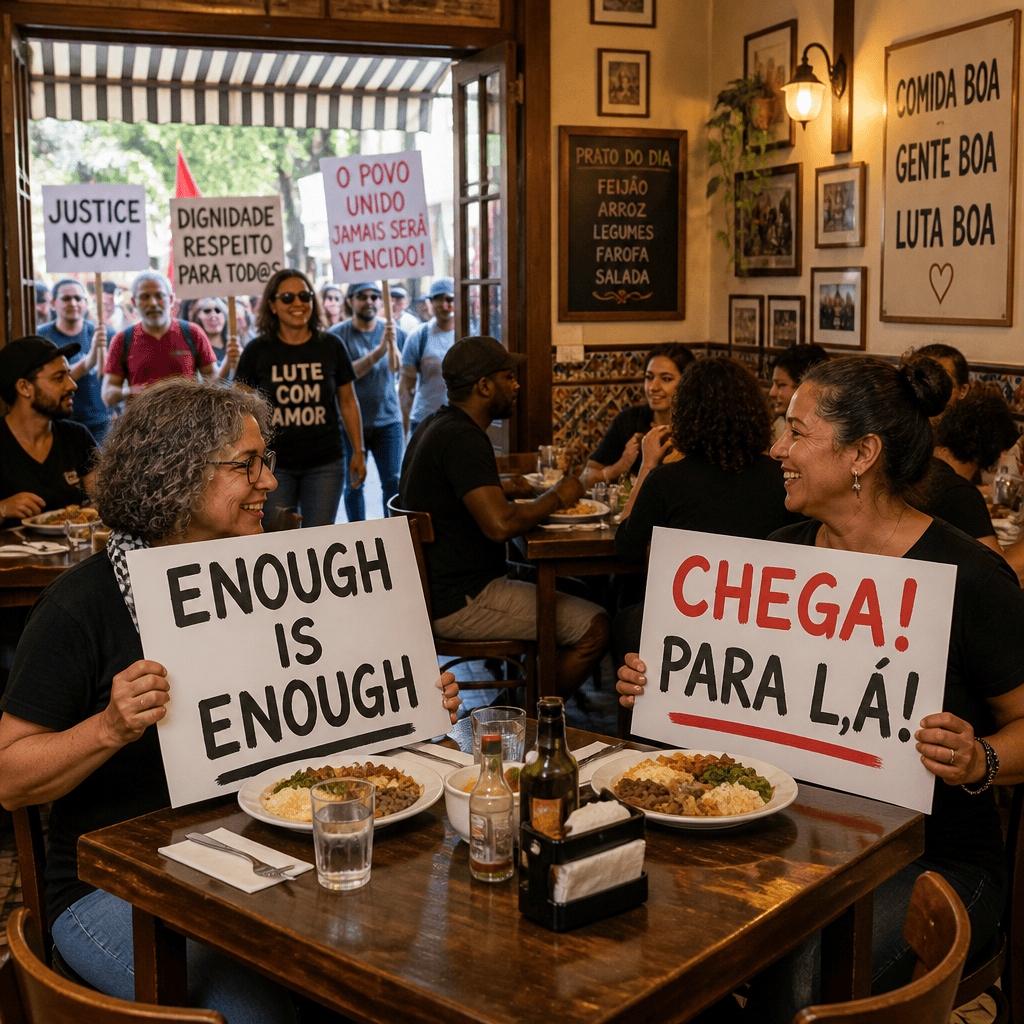
Meanwhile, at the Restaurant
The Portuguese woman with the wiry blond hair must have heard me speaking my Brazilian Portuguese (my voice is naturally loud, it’s a family trait). I had never met her, but she approached me as she was leaving, “I must tell you what happened to my uncle in Brazil.”
Hundreds of red flags rippled. Here we go. “No, it’s OK. Thank you.”
“My uncle had his money in his package. The package suddenly came undone and all his money flew. And you know what people around him did? All the Brazilians around him helped him collect all his money, counted it all and made sure not a cent was missing.” Her hands spread out, and her face crumpled in a huge smile.
I put my cutlery down, and said, “How very nice, it must have been a long time ago.”
“Remember, there are Brazilians who are very honest.” Was she telling me that? “The Portuguese don’t think they’re honest, and I know, I know what happens. If any Portuguese person says anything to you, remember, there are decent people in Brazil. There are decent people in Brazil.”
I felt like saying, I know, I know. But I said, “I totally agree with you! Thank you!” Her husband was pushing her, whispering in her ear, but she tapped my shoulder several times, and, full of unconscious bias, she blew me a kiss. Would she have blown me a kiss if I were black? Maybe that was her good deed of the day and she acquired another halo for her collection. Saint Wiry Hair. As she left, I had a terrible thought and grabbed my handbag that was hanging from the back of the chair. I checked if all the contents were still there. I know, I know.
On another occasion, we were at one of our favourite restaurants, a type of weekly gig. A female diner at another table fainted. (Remember: I have attestations from six countries that prove I’m innocent!). The owner’s wife, an Angolan woman, helped the weakened guest move to a secluded place. With due alacrity, she phoned the National Institute of Medical Emergency (INEM) who are the first responders in an emergency. By then diners had stopped eating and pretended they were not alarmed. The owner’s wife got an INEM doctor on the phone, all diners listened with mounting interest to the to-and-fro in Portuguese and English. When the owner’s wife relayed to the doctor the time when the patient had last peed, everybody relaxed: the food was not being investigated as the culprit.
The doctor decided that the patient had suffered a heat stroke, a common ailment in these lands where a cool summer day means wobbling in 40ºC (104º F) heat. Once a tourist, always a tourist, you’ve got to go places. The ambulance would be dashing to the restaurant. All of us ate slowly, ordered another wine, eager to celebrate a happy, if not efficient denouement. It took forty minutes for the ambulance and two paramedics laden to their back teeth with equipment, to appear. By then the fainted woman had recovered and had walked out with her companion. I don’t know if they paid their bill. The owner’s wife was incensed. She told the paramedics that forty minutes’ wait was inadmissible, and they could go back to where they came from. What a vile thing to say to paramedics, or anybody else. But they “went back to where they came from,” whatever that meant, or on to another assignment. She walked back through the restaurant as if she owned the place and our attention, “They were Brazilians! That’s why they took so long! Couldn’t they find a Portuguese person to work in an ambulance? They’re the competent ones. Everybody knows Brazilians are good for nothing!” She passed by me and our eyes met. I held her gaze and then it hit her. She lowered her eyes. When I paid the bill, she was downcast. I said, “Worry not, I don’t bite.” And I added with a deep voice from Hades, “Usually.”
Not all Portuguese people are xenophobic, racist, homophobic, and/or misogynist. Not all Brazilians are harassed or aggressed in Portugal (I hope). Not all Brazilians are angels , but I believe the vast – vast – majority comes here to work hard towards a better future for their families. And the immigrants in Portugal are not all Brazilians.
I feel I must finish this on a hopeful note. Someone has already said that we must not generalise. I hope I have not done that here. Right, that’s the hopeful bit done.
At a school in Lisbon, a nine-year-old Nepalese boy was attacked by five colleagues, while a sixth child filmed the assault and put it out in several WhatsApp accounts. The beating was accompanied by barks of “Go back to where you come from” and “What are you doing here?” The boy was treated at home, even though he had hematomas and many open wounds, but the parents were afraid to go to a hospital. For the same reason, fear, the parents did not press charges with the police. Only one of the perpetrators paid for his sins: three days’ suspension from school. The assaulted child was transferred to another school but has since had continuous nightmares about the attack.
Enough! is Enough!.

P.S: All images were created by A.I. under my direction.


Leave a Reply