
How do you welcome new university students? What’s the best way for them to integrate, make new friends, and acquire a sense of belonging?
Just organise a university-wide hazing, as it’s called in America. It’s called initiation or beasting in the UK. Bizutage in France. Bastardization in Australia. Trote universitário in Brazil. Praxe [pronounced PRAHsh] in Portugal.
It doesn’t matter what it’s called. At its core, and at its worst, it’s a dehumanising, degrading, abusive and dangerous activity. On the soft side, it’s fun. Maybe.
We inherited the word praxe from the same place as the English word praxis: from the Greek language. It means an accepted practice or custom. Praxe is tradition.
I first heard of praxe, or trote in Brazil, when I was in my early teens. “Friends” had gotten hold of a freshman and sent him flying over a large water fountain. His landing was so bad that he became a quadriplegic. There was a huge outcry in the country, the perpetrators were sued. I don’t know if Friends went to jail, but I believe the aggression has lessened.
Twenty-five years ago, I witnessed a praxe in Portugal, in the hilly university town of Coimbra, which tumbles down to the edge of the Mondego river. Under a casual sunshine between winter storms, I had climbed what seemed to be unending stone stairs and reached a flat square. To one end of the square, there was a coffee shop and tables with chairs outside. To the other side, there were three lines of young men in black trousers and women in knee-length black skirts, all doubled on their heels, heads bent down to their knees, hands tied on their backs. Had I faced the slippery slopes of Coimbra, a town famous for its knowledge and erudition, to find a medieval torture ritual?
I stood in the middle of the square, breathless from the climb and what I was witnessing. A woman passed by carrying a bag of groceries, tall leeks sticking out of her bag, and I asked her, “What is this? What are the police doing?”
She seemed irritated at my question, shook her hand as if shooing a fly, “They’re students! Don’t take any notice of them.”
Several foremen, or torturers, jigged between the lines of prisoners making sure they remained in their subservient doubled up positions, with their heads near the ground. The head torturer barked obscenities to all prisoners and individually, approached some and shouted into their ears that they were worthless and worse.
Lesser torturers, no doubt learning their trade, congregated at one end of the event I should not be paying any attention to. Lesser torturers watched, made lewd comments, laughed at the prisoners, egged on the head tormentor. He ordered the captives to lick the filthy ground. The prisoners did. Then he said, “Now, eat dirt!” Some of the prisoners contorted and lengthened their necks, ate dirt as ordered, lips barely touching the ground, their tongues sticking out toward the dirt as if they were starved. Starved of acceptance, attention, a sense of belonging to the tribe. Those who didn’t were castigated with more insults screamed in their ears, loud enough for all to hear, until they submitted to their torturers.
Kneeling and sitting on their heels, hands tied behind their back, heads down on the ground. They ate mud. Don’t take any notice of them!
What had those students done to deserve such punishment in a public square? They’d been accepted to study at the University of Coimbra, Portugal’s most hallowed learning institution. The students were undergoing their praxe.
Passersby rushed to their jobs and barely glanced at the praxe students or their instigators. Others sat at a bar’s esplanada enjoying a coffee and a rissole while discussing football, an approaching wedding, the increase in petrol price. Real Coimbrenses, indeed, didn’t spare a thought to students being degraded by their peers. Or no, they weren’t their peers – they were their superiors. Somehow, there seems to always be someone at the top to make you eat dirt and cackle about it. It was a common occurrence and they accepted it.
Nobody gets hurt, really. Except, I suppose, when the hurt stays where nobody can see it.
The Original Praxe
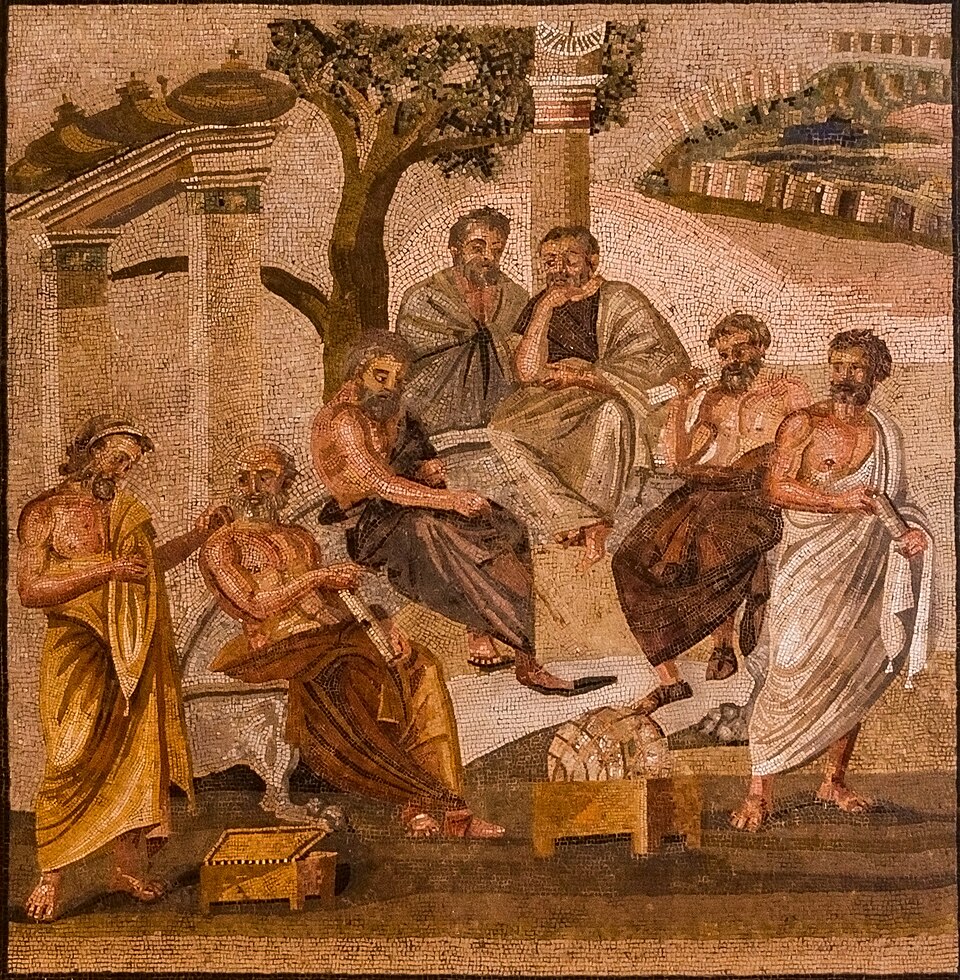
Praxe predates Christianity. It stretches its historical tentacles to Plato’s Academy in 387 B.C. Apparently, Plato didn’t appreciate the “practical jokes played by unruly young men that injured the hazed and citizens who got in the way.” He called those the “actions of wild animals”, that served to establish hierarchy among students. Still, praxe survived through the centuries.
With the dawn of higher education during the middle ages and its dissemination in Europe, pennalism, “a system of mild oppression and tormented practice upon first-year students,” established itself with many variations. It spread through Heidelberg, Avignon, Paris, and many other universities. Back then, the thought was that new students were not worthy enough to inhabit the same institution as those who were already part of it.
Since most universities were religious institutions, new students were welcomed when veterans gave them the tonsure. Newbies knew their place: treated like wild animals, shorn of their hair, forbidden to attend lessons in the same room as veterans, they all stood in a small anteroom and espied the teachings. Soon enough, beasts no more, they’d be entering those halls of wisdom.
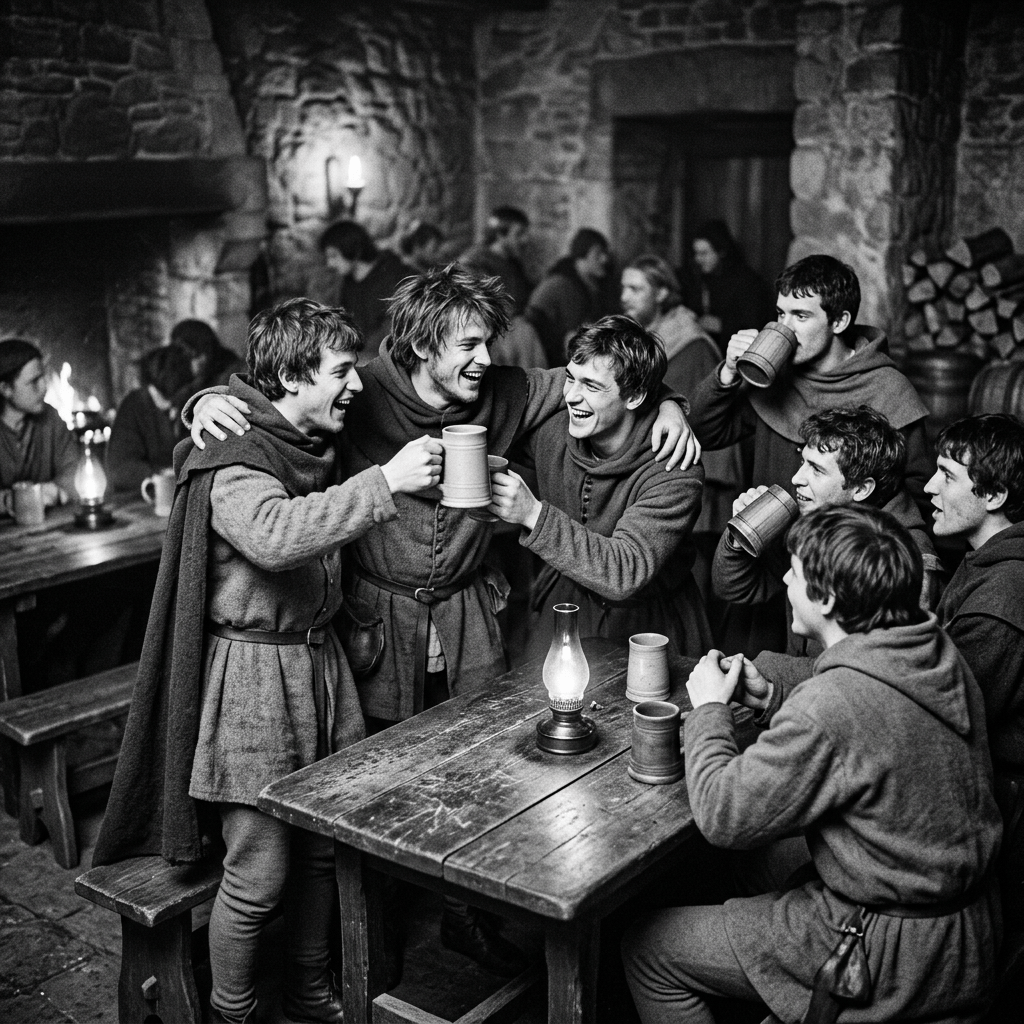
Students used a black cape that identified them as seekers of high knowledge and, in that odyssey, they were always getting drunk, fighting, and well, sometimes learning that they shouldn’t always drink and fight. They also learned that new students needed their welcome rituals. Things got out of hand when they added instruments of torture to the praxe, but with time they became the norm.
Veteran students, when they performed their hazing rituals, were allowed to cover their faces and heads with their traditional capes. Nobody knew exactly who did what to whom, or when. Societal (de-)evolution meant that students’ capes were soon used by malfeasants, who added robbery, beatings, and assassinations to their repertoire.
Since only students were allowed to wear the capes of their universities, they got the bad rap for everything that was wrong with society. In the end, nobody knew if students had really done terrible deeds, but it was generally believed that they had. In time, students and assassins became almost synonymous.
To the general population, it didn’t help that students were answerable only to the lenient university police, not the normal police. Much harm must have been done, while criminals and students have gotten away with many crimes.
University of Coimbra’s Codex Praxis
The University of Coimbra is Portugal’s first university, established in Lisbon in 1290 when King Dinis signed the Scientia Thesaurus Mirabilis. In 1308, the university moved to Coimbra and from then on alternated its location with Lisbon until 1537, when it was firmly planted in Coimbra. To quote the university’s website, they have “educated some of Portugal’s most outstanding cultural, scientific and political figures.” These august figures have undergone praxe themselves, and some have belonged to the Magnum Consilium Veteranorum (Higher Council of Veterans or something like that) which is responsible for the Codex Praxis and its correct application at the university.
The 2022 version of the Codex Praxis, in its 60 pages (I read them all so you don’t have to), describes in detail how the praxis is properly done, and by whom upon whom. Some expressions used are still written in Latin, and some of the communication is done in Latin macarrónico, or Dog Latin, a made-up language part Latin, part the user’s original language. Dog Latin turns out different for each writer and reader, for even eminent scholars have long forgotten proper Latin.
First and foremost, the Codex Praxis states that “nobody is obliged to participate in the praxis.” Ahem. Of course. There’s no peer pressure. No. There’s no blacklist. No. Ahem.

Students have their hierarchy, sometimes linked to short-lived moments, taking into consideration the Bologna definitions of first cycle (BA,BSc), second cycle (MA, MSc), or third cycle (Doctorate). Each student has to know where he or she belongs, as ephemeral as his position might be in the scholastic food chain:
Bicho (Animal or Beast): high school students in Coimbra. They cannot be mobilised, that is, be invited to take a lowly part in the Praxe, unless it’s after midnight.
Paraquedista (Parachutist): students who were accepted at one of the university’s faculties but have not yet done their matriculation. They can share the same level as the Bichos.
Caloiro Nacional (National Freshman): student that has done their first matriculation while they have not ever been to a Portuguese or foreign university.
Caloiro Estrangeiro (Foreign Freshman): student that has had their first matriculation in another Portuguese or foreign university, but are now studying at the University of Coimbra.
Caloiro Pastrano (Rustic Freshman): student matriculated at the Universitty of Coimbra, but now rests between the Cortejo da Queima das Fitas (Burning of the Ribbons) and the realization of their second matriculation. When they’re on their long holidays, I suppose.
Semiputo (Semi-Putto): a student who has two matriculations, but only during the first and second periods of Praxe. Bad name, as puto in Brazil means a male whore.
Pé-de-Banco ou Puto (Bench-foot or Putto): students who had two matriculations and have finished their second period of praxe.
Candieiro (Lamp): student with three matriculations at the university.
Quartanista (Fourth Grader): student with four matriculations.
Quintanista (Fifth Grader): student with five matriculations.
Duplo Quintanista (Double Fifth Grader): Student with more than five matriculations, but has not yet fulfilled the requirements to become a Veteran.
Semi-Lente (Half-teacher, PhD Student): first year PhD student who has had his first matriculation.
Veterano (Veteran): They have to fulfil a number of requirements, such as having been a freshman at the University of Coimbra, having successfully graduated , and having had at least six matriculations.
Dux Veteranorum (Veteran Duque): They forget, don’t they, or they don’t know, do they, that dux means leader in Latin. But they still translate and use it as a duque. To qualify as the local duque, he has been a Veteran for at least a year, and has been elected to the glorious Magnum Consilium Veteranorum. No income, crown, tiara, land or castle is attached to the title. I’ve never heard or read about a Duchess or female leader, regardless of the translation.
To the above, we can add a few short-lived titles:
Grelado (Turnipped): The name comes from 1903 when the government imposed an exaggerated tax on vegetable sellers at Coimbra’s market. Students joined the Turnip Uprising on the market sellers’ side. A graduation tradition started: the students would buy turnips from the market and stick them on their cape before obtaining their ribbons with the colour of their course.
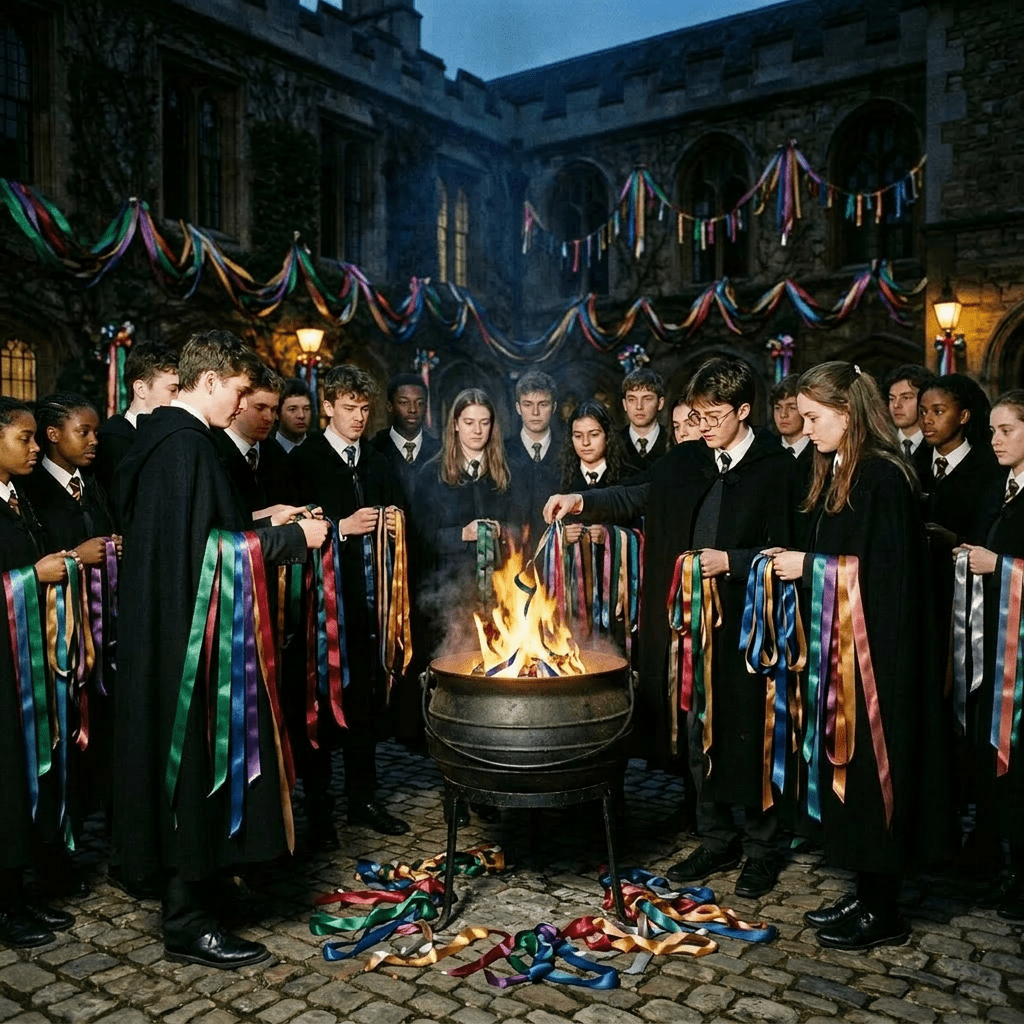
Fitado (Beribboned): when the students end a course, they burn their coloured ribbons during a ceremony on the same day as the Ribbon Burning Parade.
Futricas: an ill-bred gate-crasher. I suppose a well-bred gate-crasher is called something else.
Formigão (Big Ant): Someone with a big booty? Really, I have been unable to find out what the word means, but since it’s listed in the Codex Praxis, it must mean something to someone.
Codex Praxis’ Article 53 states prohibitions: painting the freshmen; extortion or stealing freshmen’s property; mobilising freshmen during lessons hours, as long as they can prove they have lessons at that moment; and activities that cause physical or psychological injury. From these prohibitions we get a good idea of what was done by students high up on the food chain before strict written rules became official. And perhaps we also get an idea of what’s done today under the cover of darkness.
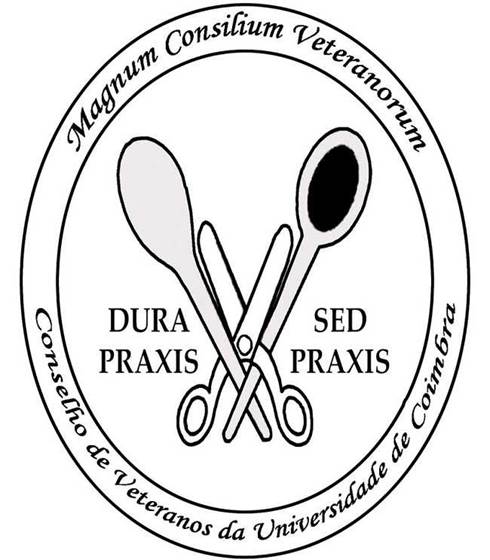
A quick look at the praxe’s logo from the University of Coimbra reveals its insignias, all dripping with the pride of tradition. They tells us all there’s to know about their intentions. Each qualifying student carries:
- Moca (Club): must be made of wood, like a caveman’s weapon
- Colher (Spoon): must be made of wood, large, a bit like a cook’s symbol of power
- Tesoura (Scisors): they can be of any size, but must have rounded points, and they cannot be taken apart.
Please scroll down these two links and to see what the club and the spoon look like in real life. It’s not difficult to imagine what some students get up to once they are armed with the traditional, obligatory weapons of their praxe.
All’s Not Horrible
Relatively quiet students in Coimbra need not fear the lack of proper, fun, healthy entertainment They can attend official Serenades, the Bohemian Supper, Gala Recital, Gala Ball, Colleges’ Night at the Park, Colleges’ Gala Ball, the Invasion of Secondary Schools by Harmonica players, Tea at Five, Dancing Tea, Mass for the Blessing of the Folders, and the Burning of the Ribbons. It’s a wonder there’s any time left for studying.
Each occasion has its sartorial protocol, usually the academic uniform with cape, while some are allowed the colours of their colleges. Others are mandated to wear cane and top hat while wearing the university uniform and cape, like gentlemen from 19th century London or Paris, or somewhere enlightened and rich. Yes, that word pops up again: tradition.
In the Algarve
On my first year as a Masters’ student, an email from His Magnificence The Rector went to all students regarding praxe, and how it should be done with respect and care (Well, that’s not praxe, is it?). Students took notice of the admonishment, and I heard nothing untoward regarding praxe. Or maybe they thought a 60 year old grandma like me would kibosh their plans, so I wasn’t mobilised, as they say. Yes, I prefer it that way.
But then there was a bake sale in aid of a class trip from another department. Female students in great numbers displayed their baking attempts on a long table, and tried to get everybody’s attention. A guy with more moustache than face took care of the cash box. So far so predictable. Mint seemed to have been the flavour of the academic quarter, and I was undecided between the orange and mint cupcake without icing, or a slice of the still intact chocolate and mint rectangle. I chose the latter. That horrid cake has clogged and tormented my memory to this day. That’s praxe and its consequences.
We approach the end of another academic year in Portugal. Ribbons will enlace folders and get burned, their ashes representing a rite of passage from student to professional; serenades will entrance lovers, awaken friends and foes; gala suppers will be held among exceptional company, and hopefully, friendships will be long-lasting.



4 responses to “Praxe: What Tradition Is This?”
Dear Regina Another very interesting read. I notice that you have concentrated on Coimbra and left out the recent Lisbon case at Sesimbra, and others which have resulted in deaths. Most if not all of which go unpunished by the courts, because I suppose the lawyers are all survivors of this stupid praxice. Even the newer universities have their praxe, I suppose to make equivalence to the older. Thank you Best Wishes Peter Ps. All the best to both of you. I am finding that my reading time is gradually being used up in other necessary activities; and it is refreshing to read the results of yours.
>
LikeLike
Dear Peter,
Thanks for your encouragement. I’m aware of the Sesimbra case et al., and at first I planned to include them in the current entry. But I’ve been trying to keep the blogs at a 10-minute read, and this one is over 13 minutes already. I’ve got most of the research done, and my findings will find their way into another blog entry. These entries sometimes steam away in my head or computer (they’re not the same) for months. You make a good point about the lawyers who might have undergone praxe themselves — who knows what happened to their psychological state… Best to you two.
LikeLike
So informative and amusing! And, as always, well and tartly written.
LikeLike
Thanks for your kind words!
LikeLike