

Please do not read on if you have chaste eyes and a virtuous mind. Or something like that.
Seventeen years in Portugal have given me the chance to appreciate its gorgeous regions and absorb some of its cultural and social identities. During that time, I’ve also been surprised by certain cultural expressions considered shocking or funny for some, especially those who speak Brazilian Portuguese, like I do.
Here’s a sample of some colourful foods, drinks, and events in Portugal. They’ve become celebrated parts of the Portuguese culture, enmeshed with its religion, politics, and food.
Punheta de bacalhau (Masturbation of salt cod)
I tried to eat it once, out of politeness, and almost fainted with the odour of raw onion and garlic. My grandmother, who had Portuguese forebears, made it for us once in a while and called it cod salad. She seemed a virtuous woman, and I doubt she knew its real Portuguese name, as these things do not travel well.
While the Portuguese people adore salt cod in all its manifestations, I, at best, have never been a fan of the stuff. That tome “One Thousand Recipes of Salt Cod” yellowed and succumbed to dust on my shelf two years ago when it was part of a mini-purge. But it attested that I’ve indeed tried to overcome my salt cod aversion, even though I’ve never reached that climax of admiration.
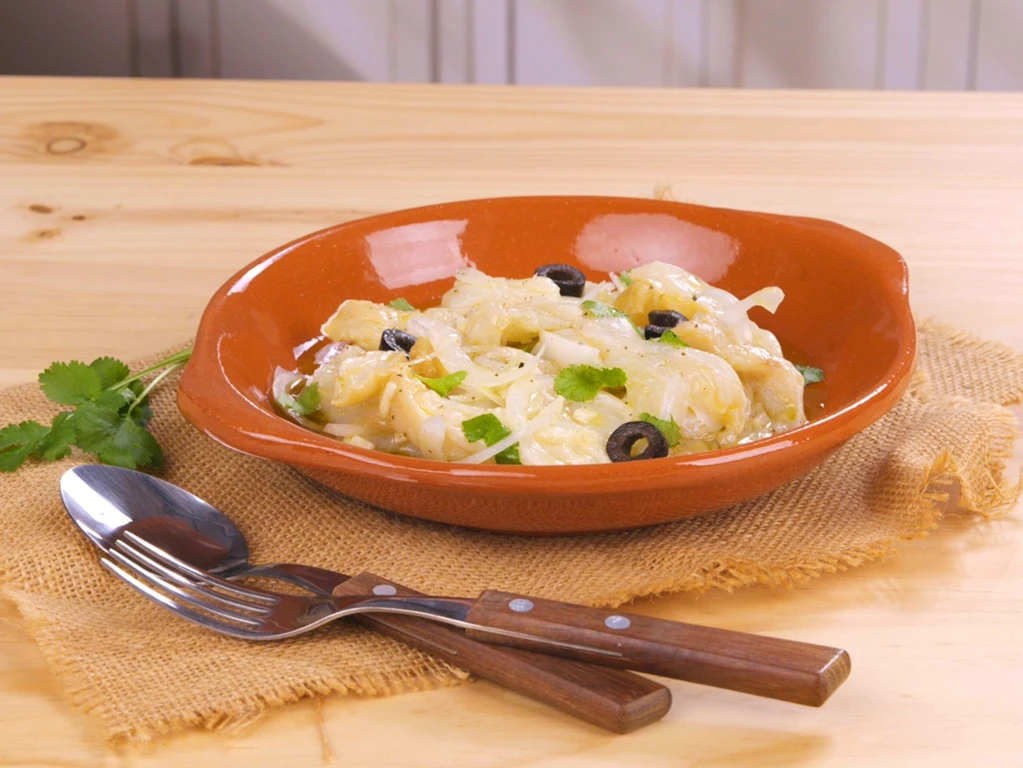
A masturbation of salt cod requires only 10 minutes of foreplay, which is a plus in today’s busy life. In my opinion, preparation time is the only good thing about this salad, regardless of what they call it, or say about it. You get your rehydrated cod, take off bones and skin, then you’re left with shreds of white flesh. To that you add fresh coriander, black olives, salt and pepper, plus heaps and heaps of raw onions and garlic. Anoint the lot with gallons of your best olive oil.
But really, this cod is not worth a toss.
Colhões de São Gonçalo (St. Gonçalo’s Full Package)
It’s not what you think. Maybe. But then Saint Gonçalo is not a saint the way we expect him to be. He first appeared in 13th century Amarante, these days a leafy town that rises from the river Tâmega to produce its traditional green wine. São Gonçalo was beatified by Pope Pious IV in the 16th century. Since then he has not gone up the official ladder of sainthood, mainly because there’s too much competition, and the popes have been too busy with other issues. The population of Amarante, however, noticing that gross spiritual injustice, promoted Gonçalo to saint with the proviso that he’d be tasked with marriage-making. As a result, if you’re a woman of a certain age who frequents Amarante and desires a husband, say the verse below and you will be rewarded within a year (Disclaimers: nobody knows what type of a husband; nobody knows if it works when a man says it):
São Gonçalo de Amarantes
Casai-me que bem podeis
Já tenho teias de aranha
Naquilo que vós sabeis
Feel free to try different versions; this is the free translation:
Saint Gonçalo of Amarantes
Get me married as you can
I’ve already got spider webs
In that which you know
As an alternative, or to consolidate the incantation if you’re desperate, you can also rub parts of your body against Saint Gonçalo’s tomb at the monastery, as some do. (This could be an addendum to my post Rub it in: Love, Sex, and Money Luck)

Almost a millennium after the saint’s death, Saint Gonçalo seems to have become a most reliable, competent saint. So much so that Amarante has acquired fame for producing a pastry in the shape of the saint’s full package in assorted sizes (after all this time, one can only guess the shape or size of the saint’s cojones). The pastry shape might have started as a fertility symbol way before Saint Gonçalo arrived at Amarante. The government forbade the making of the pastry in the 1920’s for being obscene, but it regained its strength after the Carnation Revolution, and its popularity has only increased. As have the profits of every bakery, café, and street vendor in Amarante.
The recipe is a town secret published in the internet kept by professional and home bakers, and it seems each person has a different version. One thing they all do: they shape the treats in the assumed shape of the saint’s (or the baker’s) family jewels, and then bake the lot. When cool, sometimes the package is sliced lengthwise in two, whether it merits such a desecration or not. Custard bonds the two parts, and the lot is brushed with a thin sugar paste. A must in parties, Saint Gonçalo´s package can reach a meter long to serve young and old. Once, Amarante celebrated its gastronomy with a festival and the main attraction was a 21 metre long Colhão de Sao Gonçalo. It was a veritable custard launcher.
Licor de Merda (Shit liqueur)
This iconic liqueur comes from Cantanhede, northeast of Coimbra, a region that gifted us the lip-smacking Bairrada roast suckling pig and its DOC wines. Oh, and a certain sparkling red, which I believe should be exiled with salt cod.
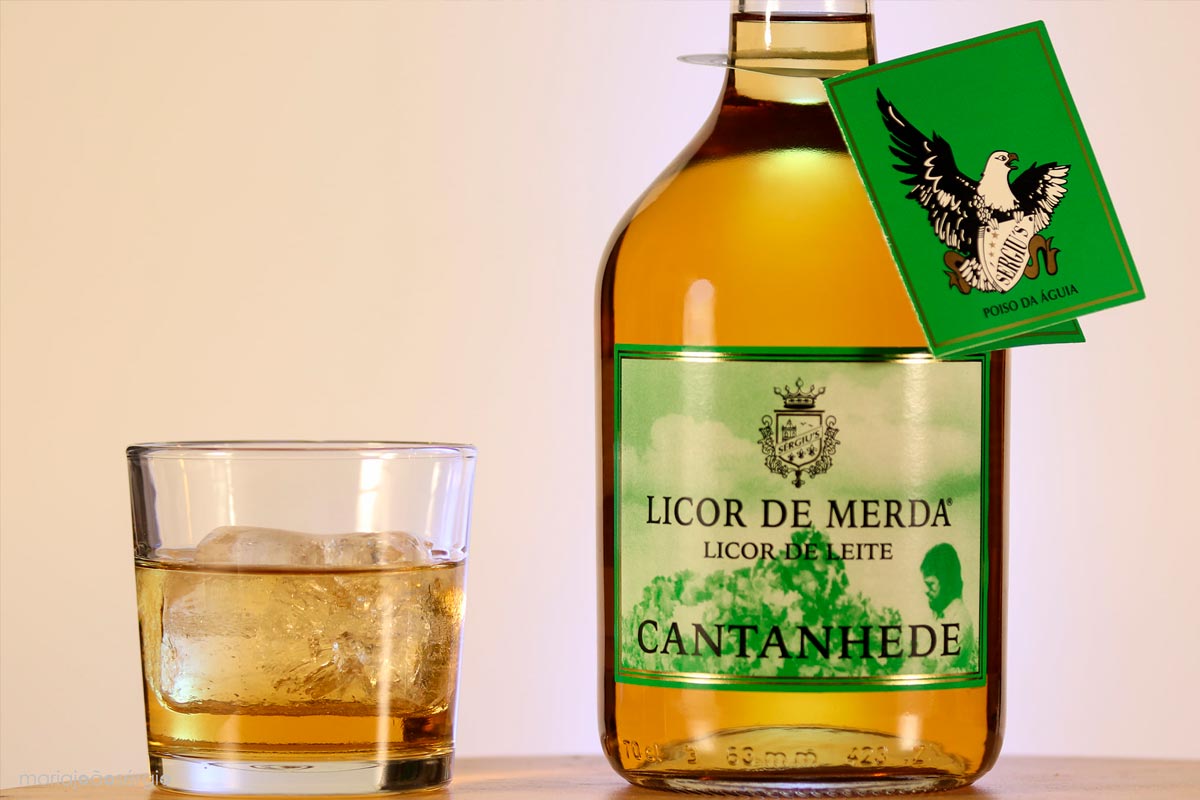
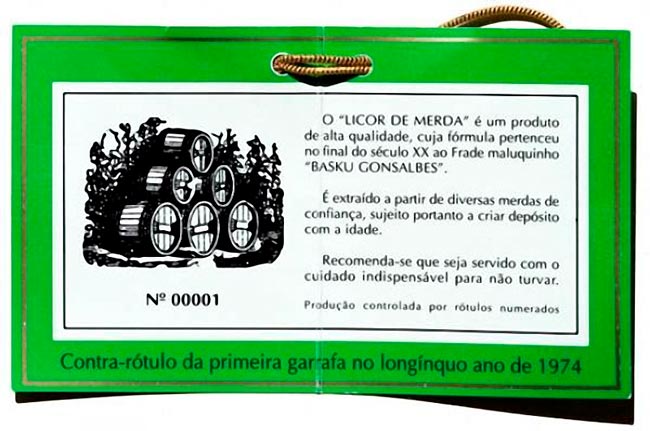
Friar Basku Gonsalbes seems to have been responsible for its creation, but he couldn’t find a good name for it. Someone then thought the political situation at the time (1974) warranted a strong stance, so in a grand homage to all politicians, the Shit Liqueur was born, or reborn, for 20th century consumption.
Apparently, there’s no mystery in the composition of the liqueur, and its label assures us it’s been produced with “several trustworthy shits” without revealing what they are or their origin. Online recipes for a home-made Shit Liqueur reveal a complex meld of common ingredients: sugar, milk, cinnamon, vanilla, citrus fruits, and cocoa.
It is, without doubt, a winning recipe. Licor de Merda has, apparently , inspired several gastronomic creations: shit ice cream, caipimerda (shit caipirinha), and shit mousse, among others.
It sounds like an exceptional product.
Periquita (Female Bits)
Yes, in Brazil it means the description above, and in Portugal Periquita is a Portuguese wine made from its namesake grape, known for its affordability. It’s been produced in the Setúbal peninsula (south of Lisbon) since 1850, when José Maria da Fonseca bought the plot of land titled Cova da Periquita (Female Bits’ Cave?). Seven generations later, the wine is exported to over 70 countries, including Brazil where it’s served with a mischievous smile. It comes in red, white and rosé.
Some think it’s a drink that comes directly from the fountain of all knowledge.
Dança dos Cus (Dance of the Anuses)
It’s not what you think. Cu in Brazil means anus, and in Portugal it means backside. This most refined dance originated in Cabanas de Viriato, south of Viseu, in the north of Portugal, over 100 years ago. Cabanas do Viriato is one of the many towns that claim to have the best carnival in Portugal.
To that effect, their Carnival Association is responsible for attracting thousands of tourists who participate in a crescendo of carnival frenzy. The grand opening offers the Hat Ball and its unmissable hat competition, followed by the Total Madness Tent Ball the next day. On Monday and Tuesday, they reach apotheosis with the only true and traditional Dança dos Cus. The Carnival Association takes their carnival seriously, and runs workshops for people of all ages to learn the correct steps of the Dança dos Cus – for you can’t have people brandishing their asses in the wrong, non-traditional way.
For some visitors’ total disappointment, Dança dos Cus is enjoyed with clothes or costumes on. In February, the temperature at Cabanas do Viriato oscillates between 3 and 12ºC.

The Dance of the Anuses is a simple combination of two long lines of people that snake through the town’s main streets dancing to the music’s tempo. They say it’s a waltz, which makes for a very boring carnival, although they’d never reveal that. Revellers, if that is the correct word, twist this way and that with their hands held aloft as if someone were pointing a rifle at them. The lines approach each other, and people’s bottoms go bump as if they were intimate friends. Which they might be. Sometimes it’s a hit, sometimes it’s a miss. It’s carnival, so nobody cares whether bums go bump or not.
For tourists who have everything, they can always buy a hoodie with Dança dos Cus stamped on it. It’s the perfect gift to take back to Brazil and use during the real carnival, when temperatures can reach 40ºC.
Feira da Foda (Fuck Market)
It’s definitely not what you think. But the word foda means the same in Brazil and Portugal. In the olden days, the market in Pias, in the northern region of Minho (not to be confused with the town of Pias in the Alentejo region), was the place to sell your sheep and ewes. But some unscrupulous vendors had a cunning plan and added salt to their animals’ feed, which in turn made the animals very thirsty. The sheep drank huge amounts of water and got fat, as to say, with water. Trusting buyers later discovered they’d been tricked, and reportedly bellowed, “Que foda!” (What a fucking buy!). The expression caught.
These days, as we can probably all attest, some people shout the same expression for almost no reason. Or maybe some eager visitors arrived in Pias expecting one type of Fuck Market and found a very different one full of smelly sheep. Still, the market lasts three days each year, and promises everyone a good time with fado, D.J’s, dance groups, shearing demonstrations, and a workshop on how to make the perfect foda.

For foda (it really means fuck) is also a festive dish of roast lamb served during Easter and Christmas. Unfortunately, in over-saintly environments these days, it’s called “lamb Monção style.” The recipe requires a large joint of lamb smothered in water and lemon juice for a day. It’s then marinated in garlic, vinegar, and paprika, placed atop a vessel containing rice and saffron, and baked in a wood oven.
They don’t call it foda for nothing. It’s fucking spectacular.
I’m always on the lookout for different cultural expressions. If you, with your sharp eyes and curious mind have found something interesting, please let me know.
As Oscar Wilde has said, every saint has a past, and every sinner has a future. I’d add that sometimes things are not what they seem.

 Regina's Rants
5 responses to “Wonderful Shocking Delicacies”
Ha!!! Wonderful!
Get BlueMail for Android
LikeLiked by 1 person
Thanks! Anything funny on your side of the woods?
LikeLike
I did read a funny book recently, by the stand-up comedian Steven
Wright. It’s called Harold. Very bizarre but wonderful.
LikeLike
Oh Regina What an interesting life you have led! Really funny – up to your usual high standard. There used to be a lorry in Britain called a Foden, needless to say, it could not be sent or sold here. Best wishes to you + Roger for the New Year Peter (+ Lynne)
>
LikeLike
Thanks Peter and Lynne! In many ways, my life is still interesting over here. And that Foden lorry — a classic! Best for 2026 and see you soon.
LikeLike